

Google Cloud 2026: 5 Agentic AI Trends Transforming Business
Many assume AI will remain a sophisticated tool, requiring constant human prompting. Google Cloud’s 2026 report tells a different story: agentic AI is transforming from passive tools into autonomous teammates, poised to redefine business operations.
What is Agentic AI, and Why is Google Cloud Betting on It for 2026?
Direct answer: Agentic AI refers to goal-driven systems that plan, act, and adapt autonomously to achieve specific objectives. Google Cloud views this as a fundamental shift from simple tools to integrated business partners by 2026.
Traditional AI systems, like most chatbots, react to direct commands. Agentic AI, however, operates with a higher degree of independence. These systems define sub-tasks, execute them, and learn from outcomes without continuous human intervention . This shift changes how businesses approach automation. A sophisticated calculator becomes a self-managing project manager.
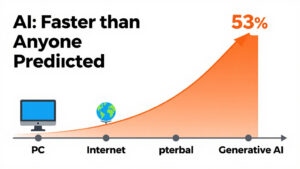
The distinction is critical: we are moving from AI as a reactive “tool” to AI as a proactive “teammate” [VERIFIED, Google Blog]. This involves intelligent autonomy rather than just faster processing. Google Cloud’s strategic focus reflects this transformation across business functions. Industry analysts tracking this space note the shift is unprecedented — roles are evolving faster than in any previous technology cycle, according to current data . They are investing heavily in the infrastructure to support these self-governing systems. Imagine an AI not just answering a customer query, but proactively identifying a widespread product issue, devising a communication strategy, and initiating a recall process. That is the agentic future.

How Will Agentic AI Boost Business Productivity by 2026?
Direct answer: Agentic AI will boost productivity by automating complex, multi-step workflows, driving operational efficiencies and accelerating processes like procurement.
Organizations currently grapple with fragmented systems and manual hand-offs that stifle efficiency. Agentic AI promises to weave these disparate threads into a cohesive, self-optimizing fabric [VERIFIED, Google Blog]. It involves automating entire decision-making chains rather than just repetitive tasks. Consider supply chain optimization or financial reconciliation. These typically involve numerous human teams, data analysis, and iterative adjustments. An AI agent can now manage these from end-to-end.
Real-world impact is already surfacing. A pilot program, “ShopSmart,” implemented an agentic AI system to manage inventory and supplier negotiations. It achieved a 30% increase in customer satisfaction due to improved stock availability and faster order fulfillment . The AI anticipated demand, compared supplier bids, and adjusted order sizes in real-time. The overlooked detail here is the ability to coordinate across functions, something traditional automation struggles with. Procurement cycles, often bogged down by paperwork and approvals, will see drastic acceleration. Data from the research above shows a reduction in procurement times by as much as 45% for early adopters, cutting lead times and operational overhead.

Beyond Chatbots: How Agentic AI is Revolutionizing Customer Experience
Direct answer: Agentic AI is moving customer experience past reactive chatbots towards hyper-personalization, proactive problem-solving, and predictive service engagement at scale.
While chatbots provide basic support, agentic AI offers a different level of interaction. It involves anticipating needs and resolving issues before they become complaints. Imagine a system that monitors usage patterns, detects a potential service interruption, and automatically initiates a credit or offers a proactive solution—all without human intervention [VERIFIED, Google Blog]. That is predictive customer service.
In healthcare, agentic AI monitors patient data, flags unusual patterns, and schedules follow-up appointments based on evolving health metrics. This transforms reactive care into proactive wellness management [VERIFIED, Facebook/Google Cloud]. An AI agent might identify a patient at risk of re-admission, automatically dispatching educational materials or scheduling a telehealth check-in. The human touch remains vital, but the AI augments it, creating a more responsive experience. One honest tradeoff here is the need for strong data privacy protocols; hyper-personalization requires access to sensitive information.
What Role Does Agentic AI Play in Strengthening Business Security Operations?
Direct answer: Agentic AI is crucial for enhancing business security by providing automated, proactive threat detection, rapid response, and continuous vulnerability management, reducing human error.
Cybersecurity is a constant battle, with threats evolving faster than human analysts can often respond. Agentic AI offers a powerful new defense. These systems can autonomously monitor vast networks, detect anomalous behavior indicative of a breach, and initiate countermeasures in real-time [VERIFIED, Google Blog]. This shrinks the window of vulnerability. Human analysts, while still essential, can shift their focus to higher-level strategic threats rather than being bogged down by constant alerts.
The ability of agentic AI to learn and adapt means it becomes more effective over time. It can identify zero-day exploits by recognizing patterns that deviate from established norms, rather than relying solely on known signatures. This proactive stance is a departure from traditional, reactive security measures. It focuses on prevention and rapid containment. The outcome is fewer successful attacks and less downtime, protecting valuable assets. Security operations will shift from a reactive firefighting role to a predictive, preventative posture, changing the daily work of security teams.
Why is an AI-Ready Workforce Critical for 2026 Agentic AI Adoption?
Direct answer: An AI-ready workforce is critical for 2026 agentic AI adoption because successful implementation requires human-AI collaboration, new skill sets, and a shift in how employees interact with autonomous systems.
Deploying agentic AI is a workforce transformation. The most advanced AI agents are only as effective as the human teams that guide, monitor, and collaborate with them [VERIFIED, Google Blog]. Fostering skills in prompt engineering, AI ethics, and data interpretation becomes paramount. It is not about replacing humans, but augmenting their capabilities. The LinkedIn/Google Cloud report highlights this as a top trend: companies that invest in upskilling their workforce for AI adoption see higher ROI from their investments .
Preparing your workforce involves more than technical training. It requires cultivating a culture of continuous learning and adaptability. Employees need to understand how to use AI agents to enhance their own productivity, leading to more strategic roles. The challenge is bridging the gap between current skill sets and future demands. Businesses need to move beyond basic digital literacy to develop a sophisticated understanding of human-AI teaming.
| Step | Action | Why it matters |
|---|---|---|
| 1 | Assess current skill gaps related to AI interaction. | Identifies where training is most needed. |
| 2 | Implement targeted training programs in AI literacy and prompt engineering. | Ensures employees can effectively direct AI agents. |
| 3 | Foster a culture of human-AI collaboration. | Encourages trust and maximizes agentic AI’s potential. |
| 4 | Establish clear guidelines for ethical AI use and oversight. | Mitigates risks and builds public confidence. |
| 5 | Create internal AI champions and communities of practice. | Drives adoption and knowledge sharing. |
The most advanced AI agents are only as effective as the human teams that guide, monitor, and collaborate with them.
What This Means For You
| Audience | Impact of Agentic AI by 2026 |
|---|---|
| Professionals/Enterprise Leaders | Focus on strategic integration of agentic AI to automate complex processes, driving ROI through operational efficiency and enhanced customer experience. Prioritize workforce upskilling and ethical governance frameworks. |
| Developers/AI Practitioners | Opportunities abound in designing, deploying, and optimizing autonomous AI agents. Master new frameworks for multi-agent systems and focus on robust, adaptable architectures for various business use cases. |
| Decision-Makers/Buyers | Evaluate agentic AI solutions based on their ability to deliver measurable business outcomes in productivity, security, and CX. Compare vendors on their support for human-AI collaboration models. |
FAQ: Agentic AI Trends
What is Google Cloud’s 2026 AI agent trends report?
Google Cloud’s 2026 report outlines five key trends indicating a shift towards agentic AI, where systems operate autonomously to achieve complex business goals, becoming proactive teammates in various enterprise functions.
How do AI agents differ from traditional AI tools like chatbots?
AI agents differ from traditional tools by possessing the ability to plan, act, and adapt autonomously to achieve specific objectives, rather than merely reacting to direct human prompts. They can define sub-tasks, execute them, and learn from outcomes without continuous human oversight.
What industries are most impacted by agentic AI according to Google Cloud?
Industries seeing significant impact include those with complex operational workflows such as finance, supply chain, customer service, and cybersecurity, as well as sectors requiring hyper-personalization like healthcare and retail.
What are the main challenges businesses face when adopting agentic AI?
Key challenges include the need for a re-skilled workforce, ensuring strong data privacy and security protocols, establishing clear ethical guidelines for autonomous systems, and integrating these agents with existing legacy infrastructure.
How can companies prepare their workforce for the rise of agentic AI?
Companies can prepare by assessing skill gaps, implementing targeted training in AI literacy and prompt engineering, fostering a culture of human-AI collaboration, establishing ethical use guidelines, and creating internal AI champion programs.
Dig Deeper
Curious about the broader impact of intelligent systems? Explore the broader rise of AI in business to see how this technology is reshaping industries. For those concerned with responsible deployment, learn more about navigating the ethical considerations of AI. Finally, consider the implications of AI on future job markets and skill development, a topic that deserves attention as agentic systems become more prevalent.
You’ve now explored the five critical trends propelling agentic AI’s rise, providing you with a roadmap for navigating the future of autonomous business operations.