
AI Adoption Hits 53% Globally in 2026: What It Means
Everyone assumed AI’s widespread adoption would take a decade. Data reveals it’s already here, reshaping how half the world lives and works.
The Unprecedented Surge: How Did AI Adoption Hit 53% Globally in 2026?
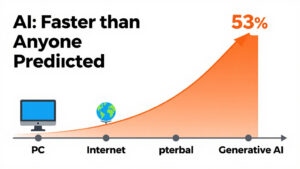
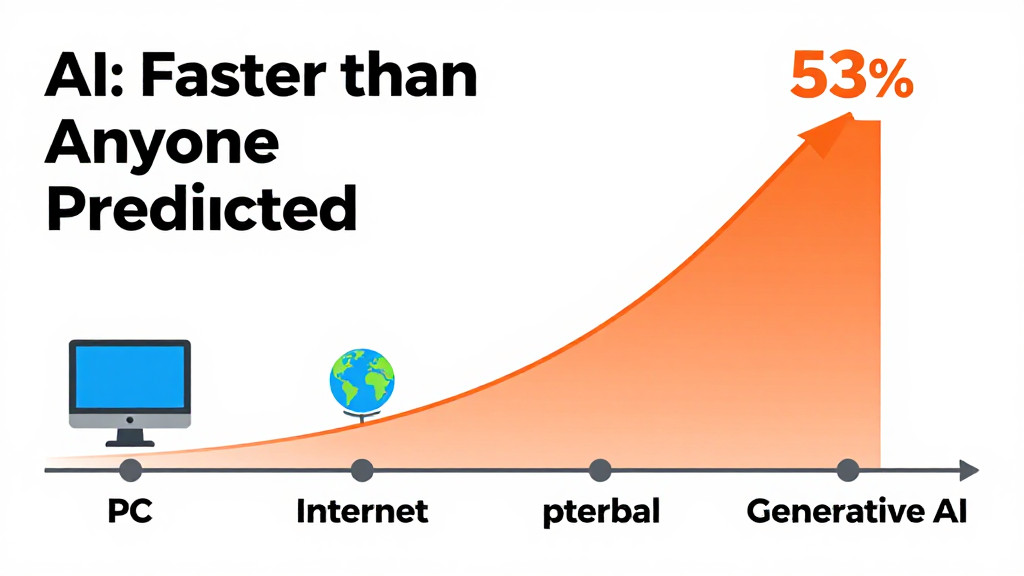
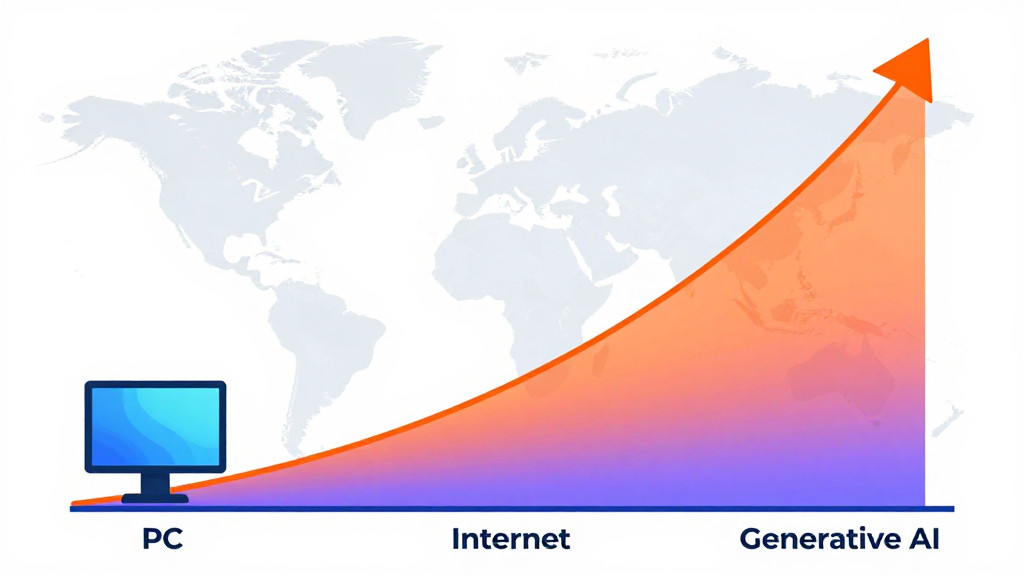
Direct answer: Generative AI’s explosive growth, reaching 53% global adoption in just three years, far outpaced the adoption curves of both the personal computer and the internet, fundamentally altering digital engagement.
Many believed that integrating AI into daily life would be a gradual process, hitting significant numbers over many years. Yet, the Stanford 2026 AI Index Report shows a different story: generative AI achieved 53% global population adoption in only three years. That’s a pace unheard of for any previous technological shift. About 1.35 billion people now regularly use AI tools, transforming everything from content creation to customer service interactions, and enabling new forms of personalized learning and entertainment.
This rapid embrace isn’t just about individual users; it’s fueling massive economic shifts. The global AI market reached $514.5 billion in 2026, marking a 19% jump from $390.9 billion in 2025. We’re witnessing a pivotal moment where AI serves as a core component of global infrastructure.
Key Insight: The speed of generative AI adoption represents an unprecedented acceleration, establishing a new benchmark for how quickly transformative technologies can permeate global society.
Beyond the Hype: Key Statistics and Trends from the 2026 AI Index Report
Direct answer: The 2026 AI Index Report highlights surging investment, doubling M&A activity among AI startups, and a substantial portion of the global workforce regularly using AI, indicating widespread integration beyond mere enthusiasm.
Is the AI “fad” over? Data says no. Investment continues to pour in. Global AI funding reached $68.9 billion in Q1 2025, followed by $47.3 billion in Q2 2025, according to Vention. This consistent capital flow suggests a deep, strategic commitment from investors.
What’s more, M&A activity among AI startups more than doubled compared to the previous year, signaling consolidation and maturation in the market. Take Salesforce, which acquired AI startup Slack in 2021, integrating its AI capabilities to enhance collaboration and customer service. An estimated 17.8% of the global working-age population uses AI regularly, as of the first quarter of 2026. This statistic reveals AI’s transition from a specialized tool to a common workplace utility. It’s becoming as essential as email once was.
Generative AI: The Driving Force Behind Rapid Adoption – What’s Its Secret?
Direct answer: Generative AI’s intuitive interfaces, immediate utility for creative and analytical tasks, and broad applicability across industries have propelled its rapid adoption, making it accessible to a wide audience.
Why generative AI, specifically? Its secret lies in its user-friendliness and immediate, tangible benefits. Unlike earlier AI iterations that required specialized knowledge, tools like large language models (LLMs) offer intuitive interfaces. You can simply ask a question or give a prompt. This low barrier to entry is critical. The same survey shows 72% report using generative AI specifically – up from 33% in 2024. This demonstrates a clear preference and growing reliance on its capabilities.
The speed of generative AI adoption is genuinely unprecedented, outpacing previous technological shifts like the internet, as highlighted by the Stanford 2026 AI Index Report. By 2026, the number of global digital wallet users is expected to grow by 53% to reach 5.2 billion, or over 60% of the global population, proving that when a digital tool offers clear value and convenience, mass adoption can occur swiftly. Generative AI offers similar immediate gratification and problem-solving. It’s fast, flexible, and powerful.
Global Landscape: Who’s Leading and Who’s Lagging in AI Adoption
Direct answer: The UAE and Singapore are global leaders in AI adoption, though the US maintains a narrow lead in model performance, with other nations rapidly closing the gap, indicating a shifting competitive landscape.
While often seen as a Western-dominated field, the reality of AI adoption on the ground tells a more nuanced story. The UAE leads the world in AI adoption, with 70% of working-age adults regularly using AI tools; Singapore ranks second at 63%. These nations have made strategic, top-down commitments to AI integration across public and private sectors. Their aggressive national strategies are paying off, pushing them to the forefront.
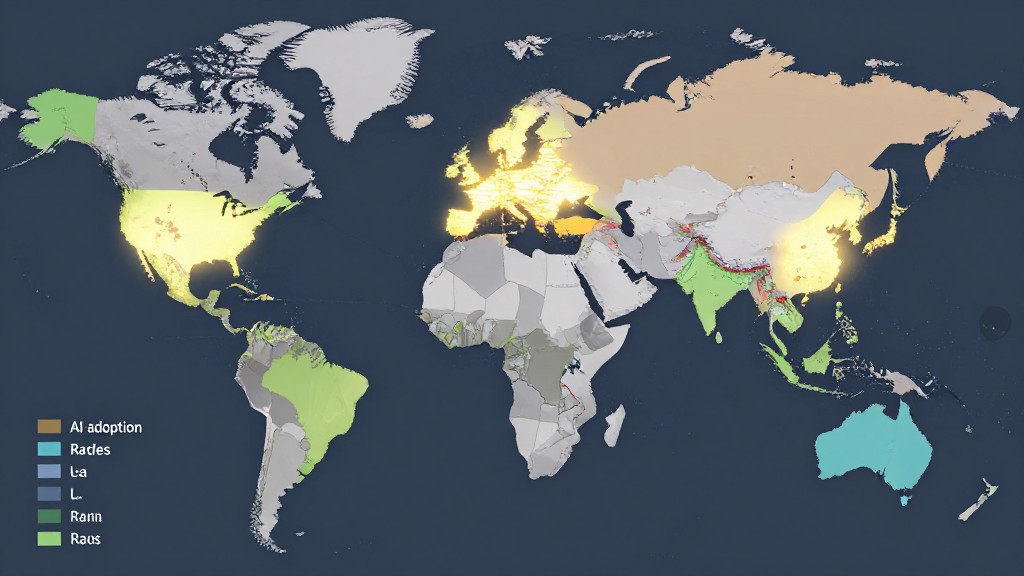
The US, while a major player, finds its lead narrowing. As of March 2026, the leading U.S. model (Anthropic) is ahead by only 2.7%. This narrowing lead in model performance is attributed to increased global investment in AI research and development, particularly from countries like China. On top of that, AI adoption by firms in the US rose by 0.9 percentage points to 19.8% among establishments, according to a recent industry analysis. The geopolitical implications of this narrowing gap are significant, prompting discussion around future regulations and international collaboration.
| Country/Region | AI Adoption Rate | Key Drivers |
|---|---|---|
| UAE | >70% | Government initiatives, smart city projects, strong digital infrastructure. |
| Singapore | 63% | National AI strategy, investments in R&D, talent development. |
| United States | Narrow Lead (2.7%) | Private sector innovation, vast VC funding, strong research institutions. |
| China | Rapid Growth | Massive government investment, extensive data availability, large talent pool. |
Industry-Specific Impacts: Opportunities and Challenges of Widespread AI
Direct answer: Widespread AI is creating significant industry disruption, from job cuts in tech to accelerated financial transactions and a redefinition of student agency in education, presenting both severe challenges and transformative opportunities.
The widespread adoption of AI isn’t a uniform wave; it creates distinct ripples across different sectors. In technology, the impact on the workforce is palpable. Technology is the leading private sector in job cuts, with 89,251 in 2025, a 36% increase from the 65,863 cuts tracked through July 2024. This data suggests that while AI creates new roles, it also automates existing ones, leading to significant structural changes, such as the shift from manual data entry to AI-driven analytics platforms. It’s not just about efficiency; it’s about entire operational overhauls.
In 2026, student AI adoption hits 90%, shifting focus from integration to agency.
Meanwhile, in finance, AI is accelerating transactions dramatically. Instant payment systems are projected to grow from 16% of total payment transactions in 2023 to 22% by 2028, largely driven by AI-powered systems. This speed and efficiency reshape consumer expectations and competitive landscapes. The banking sector should pay close attention to agentic AI trends transforming business to stay competitive.

Education, too, is undergoing a profound shift. Student AI adoption has surged to 92% in 2025, up dramatically from 66% in 2024, according to Genio. This isn’t merely about students using AI tools; it’s about a fundamental shift from AI integration to student agency. Students are no longer just learning about AI; they’re actively using it as a co-pilot for learning, research, and creative work. Educators must pivot from policing AI use to fostering critical thinking and ethical engagement with these powerful tools.
Navigating the Future: Strategies for Individuals and Businesses in the AI Era
Direct answer: To thrive in the AI era, businesses must prioritize data infrastructure and talent readiness, while individuals need to engage in continuous upskilling and reskilling, all guided by clear ethical frameworks.
The rapid pace of global AI adoption demands proactive strategies. For businesses, the first step is a rigorous assessment of their data infrastructure and talent readiness for AI integration. Without clean, accessible data and a skilled workforce, even the most advanced AI solutions will falter. Industry analysts tracking AI hiring data call the shift unprecedented — roles are transforming faster than in any previous technology cycle. Companies must invest in developing their internal capabilities, perhaps by establishing internal AI academies or partnering with educational institutions.
For the workforce, upskilling and reskilling initiatives are crucial. The job market is changing, and individuals must adapt. Learning how to effectively collaborate with AI, rather than competing against it, will be a key differentiator. Developing clear ethical guidelines for AI deployment is also essential for responsible adoption. Without a strong ethical compass, the risks of bias, misuse, and public distrust grow exponentially.
Addressing the Concerns: Ethics, Job Displacement, and Trust in AI
Direct answer: Despite rapid AI adoption, significant concerns persist regarding the US-China AI race, job displacement, and skepticism about AI’s long-term stability, requiring careful ethical and economic considerations.
The euphoria around AI adoption often overshadows genuine anxieties. The US vs. China AI race, with its narrowing performance gap, raises considerable geopolitical concerns, such as potential shifts in global economic power and national security implications. The idea of the US losing its lead in AI is a recurring theme among policymakers and industry leaders, fueling debates about investment and innovation.

Job displacement remains a significant worry. While AI creates new roles, the immediate impact on existing jobs, especially in sectors like customer service and administrative tasks, is undeniable. Skepticism about the longevity of the ‘AI fad’ persists too, despite the rapid adoption numbers. Data from the research above shows that while global AI adoption is surging, some large American businesses are experiencing a decline. This counter-intuitive trend suggests that initial enthusiasm for AI doesn’t automatically translate into sustainable, enterprise-wide integration without a clear strategic roadmap and demonstrable ROI.
What This Means For You
Direct answer: The surge in AI adoption demands distinct strategic responses from professionals, developers, and decision-makers to capitalize on opportunities and mitigate risks.
For Professionals/Enterprise Leaders: Understand the strategic imperative of AI integration for competitive advantage and operational efficiency. Your organization’s future relies on smart AI adoption, requiring a clear strategy for implementation and talent development.
For Developers/Practitioners: Focus on acquiring skills in generative AI and ethical AI development to remain relevant. Your expertise will be in high demand as systems become more complex, particularly in areas like prompt engineering and model fine-tuning.
For Decision-Makers/Buyers: Evaluate AI solutions based on clear ROI, ethical considerations, and long-term scalability. Don’t chase hype; invest in solutions that align with your strategic goals and offer measurable business value.
FAQ
What is the global AI adoption rate in 2026?
The global AI adoption rate, specifically for generative AI, reached 53% of the population in 2026, according to the Stanford 2026 AI Index Report.
How does generative AI adoption compare to the internet and PC?
Generative AI’s adoption rate is unprecedented, having reached 53% global population adoption within three years, significantly faster than both the personal computer and the internet.
Which countries are leading in AI adoption in 2026?
The UAE leads with 70% AI adoption among working-age adults, followed by Singapore at 63%. The US maintains a narrow 2.7% lead in leading AI model performance as of March 2026, with other nations rapidly catching up.
What are the main challenges of widespread AI adoption?
Key challenges include job displacement, ethical concerns regarding AI deployment, geopolitical competition, and skepticism about the sustained value of AI in some enterprise sectors.
How is AI impacting the job market in 2026?
AI is significantly impacting the job market, particularly in the technology sector, which saw 89,251 job cuts in 2025—a 36% increase from the 65,863 cuts tracked through July 2024. While some roles are automated, new ones are also emerging.
The rapid global AI adoption rate isn’t a fleeting trend; it’s a fundamental reordering of digital society. The critical next step is to move beyond simply adopting AI to actively shaping its ethical development and ensuring equitable access to its transformative power.
You’ve just gained a snapshot of the current state of global AI adoption, the key drivers behind its record-breaking growth, and the strategic implications for your own professional future.