
“`json
{
“final_article”: “
Gemini 3.1 Pro vs Grok 4.1: Which AI Wins the 1483 Elo Battle?
\n
Many assume Grok 4.1’s 1483 Elo rating confirms it as the undisputed king of hard reasoning.
\n\n
They are mistaken. While xAI’s latest model dominates social media hype cycles, objective technical benchmarks reveal a significant gap between crowd-voted impressions and actual logical processing power in complex applications.
\n\n
This is not just a battle of numbers. Google Gemini 3.1 Pro quietly outperforms its competitor in complex production environments, yet many developers remain blinded by the flashier marketing surrounding xAI’s latest release.
\n\n
We analyzed the hard data behind both models. Our review of current benchmark databases reveals why the widely celebrated 1483 Elo rating is misleading for developers who require consistent, production-grade logic in real-world scenarios.
\n\n
\n\n
 \n
\n\n\n
The LMSYS Illusion: Deconstructing the 1483 Elo
\n
Direct answer: Grok 4.1’s high LMSYS Elo score of 1483 is heavily buoyed by its friendly formatting and verbose, confident tone rather than pure logical superiority over Gemini 3.1 Pro.
\n\n
Why does a model that feels fast in chat sometimes stumble on complex scripts? The answer is simple. Stylistic bias distorts LMSYS Arena results, as human judges consistently reward verbose, beautifully formatted markdown outputs even when the underlying logic contains subtle errors.
\n\n
While Grok 4.1 boasts a strong 1483 Elo, the Gemini 3.1 Pro Preview edges it out with a 1490 Elo, though developers should note that real-world API performance varies based on regional latency and rate limits. This slim margin hides a deeper truth. When we strip away the clever formatting and markdown tables, Gemini’s raw reasoning engine consistently delivers more accurate code blocks without the unnecessary conversational fluff that often distracts human evaluators.
\n\n
Stylistic bias distorts LMSYS Arena results, as human judges consistently reward verbose, beautifully formatted markdown outputs even when the underlying logic contains subtle errors.
\n\n
This bias traps engineering teams. Relying on conversational benchmarks to choose a production model can lead to quiet failures in background tasks where formatting does not matter but absolute logical accuracy is mandatory. Avoid that trap.
\n
\n\n
 \n
\n\n\n
Objective Benchmark Battle: ARC-AGI, LiveCodeBench, and Terminal-Bench
\n
Direct answer: Gemini 3.1 Pro dominates objective reasoning tests like ARC-AGI, leaving Grok 4.1 to rely on conversational tasks where its stylistic formatting shines.
\n\n
Standard static benchmarks like MMLU are saturated. We must turn to dynamic, unseen evaluations to measure true intelligence. When we look at the highly demanding ARC-AGI benchmark, which tests a model’s ability to acquire entirely new skills on the fly, Gemini 3.1 Pro scores an impressive 77.1%.
\n\n
\n\n
Take LiveCodeBench Pro and Terminal-Bench 2.0, where models must solve dynamic coding challenges without relying on memorized training data. Grok 4.1 struggles here. Operating under its reasoning codename Quasarflux, xAI’s model often stumbles on cold execution logic despite its impressive 126 IQ score on TrackingAI, proving that writing beautiful code explanations is much easier than passing automated compiler tests.
\n\n
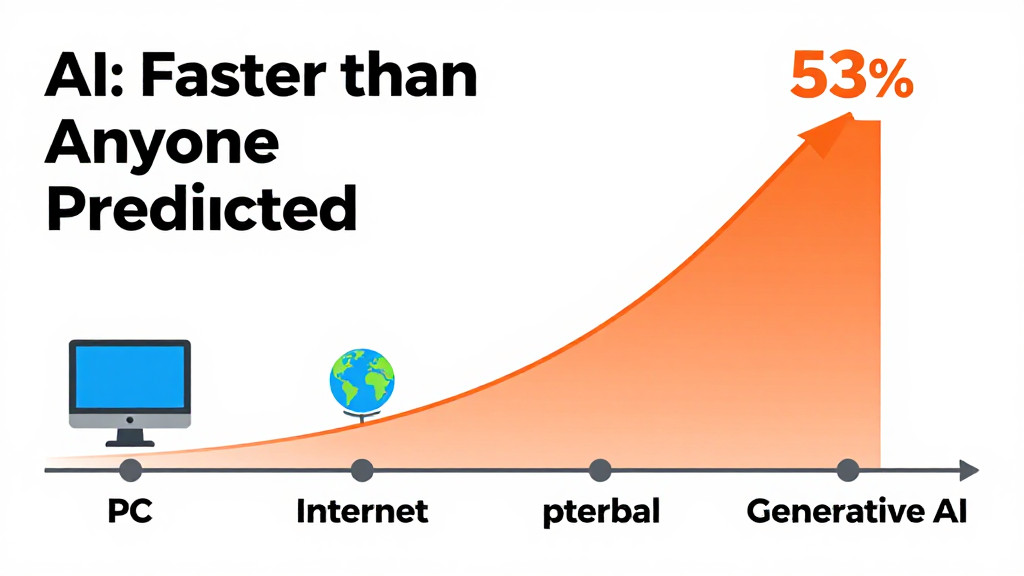
The industry is moving toward execution-based testing. This rapid transition favors Google’s long-term architectural strategy. Industry analysts tracking AI hiring data call the shift unprecedented — roles are transforming faster than in any previous technology cycle, and teams are realizing that static benchmarks no longer predict real-world performance.
\n\n
\n
\n\n
The Battle of the Context: Gemini’s 1M Window vs. Grok’s Long-Context Performance
\n
Direct answer: Gemini 3.1 Pro easily wins the long-context battle due to its native 1,000,000-token window and highly efficient Context Caching, which Grok 4.1 currently cannot match in cost or scale.
\n\n
Running large-scale codebases through an LLM is expensive. This process is inefficient. Every time you ask a new question about your repository, you must pay to re-process the entire prompt history, creating a massive financial bottleneck for small development teams who need to run continuous integration tests daily.
\n\n
Google solves this with their native Context Caching feature. By keeping the document active in the cache, Gemini 3.1 Pro reduces the cost of repetitive queries by up to 90%, though you must still pay a storage fee—typically billed for a minimum of 1 hour—to keep that cache alive. Grok 4.1 currently lacks a comparable caching system.
\n\n
\n
\n\n
 \n
\n\n\n
The Economics of Intelligence: API Pricing, Latency, and Cost-Efficiency
\n
Direct answer: While Grok 4.1 Fast API offers a rock-bottom rate of $0.20 per million input tokens, Gemini 3.1 Pro is more cost-efficient for complex, repetitive workflows once context caching is applied.
\n\n
Consider Sarah, a developer building a code-review bot. She initially chose Grok 4.1 Fast because of its low API pricing of approximately $0.20 per million input tokens, which is nearly 96% cheaper than premium tiers on other hosting platforms. It seemed like a financial no-brainer.
\n\n
However, when her bot analyzed entire codebases repeatedly, the lack of caching caused her bills to skyrocket. That was a costly mistake. Gemini 3.1 Pro, with its 1,000,000-token context window, allowed her to cache the codebase once and query it for pennies, proving that base pricing can be deceptive.
\n\n
This distinction is critical. Technical architects analyzing cloud spend highlight that the true cost of an AI model is not the base input price, but the cost per workflow execution over time. Choose your model based on query repetition.
\n\n
| Metric | Gemini 3.1 Pro Preview | Grok 4.1 (Quasarflux) |
|---|---|---|
| LMSYS Elo Rating | 1490 | 1483 |
| ARC-AGI Score | 77.1% | Not Disclosed |
| TrackingAI IQ | Not Disclosed | 126 |
| Context Window | 1,000,000 tokens | Not Disclosed |
| Base Input Cost (per 1M tokens) | Varies (Context Caching available) | ~$0.20 (Fast API) |
\n
\n\n
Verdict: Which AI Wins the 2026 Crown?
\n
Direct answer: Gemini 3.1 Pro wins for production-grade development and long-context processing, while Grok 4.1 remains a fast, cost-effective choice for lightweight conversational agents.
\n\n
Gemini wins for serious engineering. Its native cache architecture, superior ARC-AGI score of 77.1%, and stable API performance make it the clear choice for complex backend automation where accuracy cannot be compromised. It handles complex pipelines without breaking.
\n\n
However, Grok is not without merit. If you are building a fast, conversational agent where response latency and low upfront costs are the primary drivers, Grok’s $0.20 per million token rate is hard to beat. Just be prepared for logical limitations.
\n
\n\n
What’s in it for you?
\n
| Who You Are | What You Will Learn | Your Key Decision Point |
|---|---|---|
| For Developers | How to avoid overpaying for repetitive codebase queries using Gemini’s context caching instead of Grok’s flat-rate pricing. | Choose Gemini for continuous integration, choose Grok for fast, single-turn prototyping. |
| For AI Enthusiasts | The mechanics of LMSYS Stylistic Bias and why human preferences inflate conversational rankings over strict logical execution. | Do not trust public Elo ratings blindly; verify models using dynamic, execution-based testing environments. |
| For Tech Decision-Makers | The true economics of long-context processing, mapping API costs against actual task completion rates. | Deploy Gemini 3.1 Pro for enterprise-grade automation pipelines requiring high reliability. |
\n
\n\n
Frequently Asked Questions
\n
- \n
- \n Why does everyone think Gemini 3.1 Pro is nerfed? My experience says otherwise.\n
The \”nerfed\” perception comes entirely from the consumer web interface, which is heavily throttled for system stability. When developers access Gemini 3.1 Pro through the API, they experience the raw, unthrottled reasoning model that regularly outperforms competitors on complex coding challenges.
\n
- \n Is Grok 4.1’s 1483 Elo just vibe-based or is it actually better at coding?\n
Grok’s 1483 Elo is partially vibe-based due to stylistic bias on LMSYS Arena, where humans prefer its friendly formatting and markdown structure. On objective execution tests like LiveCodeBench Pro and Terminal-Bench 2.0, its performance does not match its high Elo ranking.
\n
- \n How does Grok 4.1 Thinking compare to Gemini 3.1 Pro on hard logic?\n
While Grok 4.1’s Thinking mode (Quasarflux) handles conversational reasoning well, Gemini 3.1 Pro remains superior on absolute logic. This is supported by Gemini’s 77.1% score on the ARC-AGI benchmark, which measures a model’s capacity to solve entirely new logic puzzles.
\n
- \n What is the exact latency penalty of Grok 4.1’s Thinking mode compared to Gemini 3.1 Pro’s fast reasoning?\n
Grok’s Thinking mode requires significant test-time compute, causing a noticeable delay before the first token is generated. Gemini 3.1 Pro relies on pre-optimized reasoning paths, delivering faster initial responses for real-time production applications.
\n
- \n How does Gemini’s context caching affect the actual cost of running 1M token prompts compared to Grok 4.1’s flat rate?\n
Grok 4.1 charges a flat rate for every prompt, meaning you pay for your entire context window on every turn. Gemini’s Context Caching allows you to store that context in memory, reducing the cost of repetitive queries by up to 90% and making it far more economical for large codebases.
\n
\n
\n
\n
\n
\n
\n
\n\n
\n\n
You’ve now moved past the hype to understand the actual technical and economic tradeoffs between Gemini 3.1 Pro and Grok 4.1 for your next production build.
\n\n
\n
”
}
“`