
DeepSeek-R1 vs. OpenAI: Is the AI Market Share Shift Real?
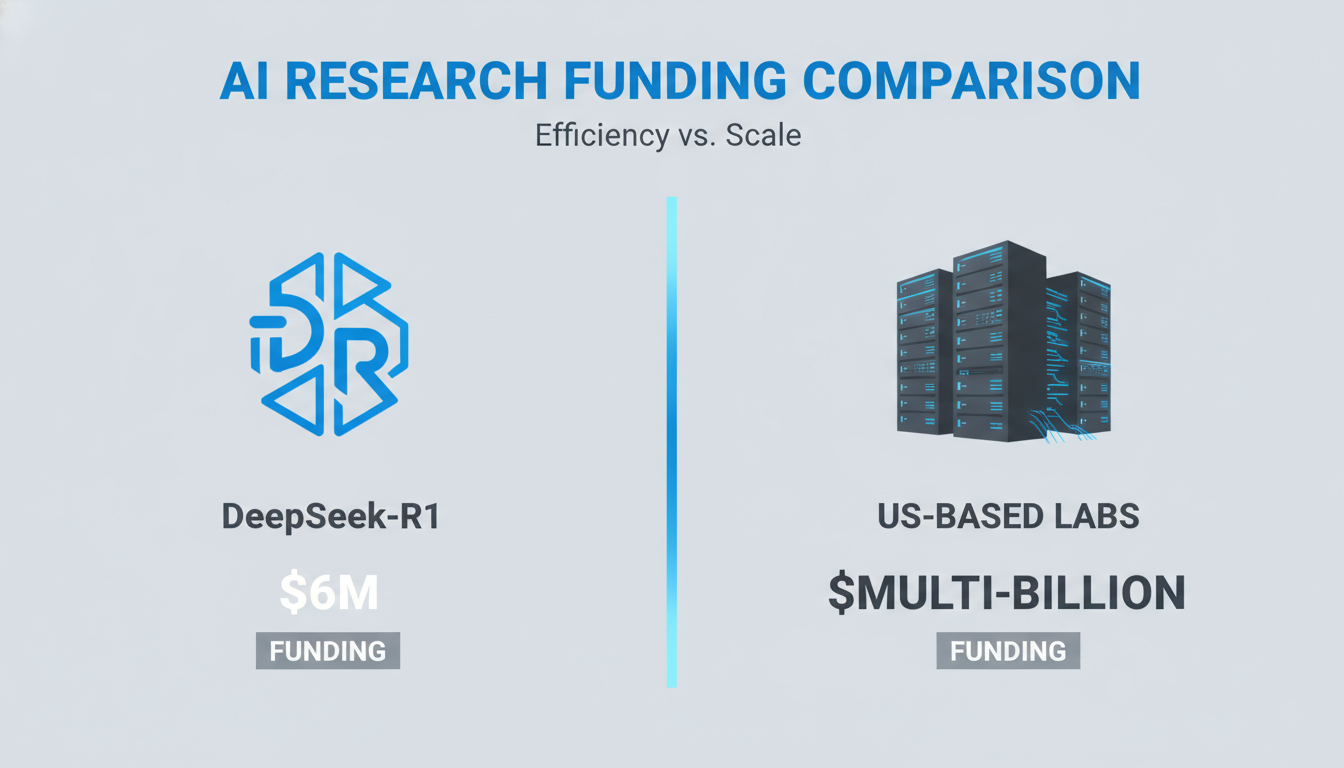
DeepSeek-R1 trained for under $6 million, wiping $1 trillion off tech stock value in one week. This sudden market contraction sent a clear message to Silicon Valley. The era of defending AI dominance purely through multi-billion-dollar compute budgets has ended.
What is the DeepSeek-R1 Shockwave and Why Does It Matter?
Direct answer: The DeepSeek-R1 shockwave refers to a Chinese research lab releasing an open-weight reasoning model that equals OpenAI’s top models at 25x lower cost.
The rise of DeepSeek, a Chinese quantitative hedge fund subsidiary, caught the AI community completely off guard. By utilizing clever architectural optimizations instead of throwing endless money at massive data centers, they matched the best systems in the world. This swift climb has altered investor sentiment and forced US firms to rethink their technical roadmaps.
The term “shockwave” is not hyperbole when looking at the budget disparities. Silicon Valley giants run supercomputers that cost hundreds of millions of dollars to run a single training cycle. DeepSeek-R1 proved that high-level intelligence does not require a blank check from venture capital firms.
Furthermore, the shift from closed-source systems to transparent architectures is changing developer trust. Developers are tired of hidden API changes and unannounced behavior updates in closed systems. Having access to the raw weights means teams can deploy, audit, and modify the model directly on their private servers.
Key Insight: The shockwave is not a triumph of raw compute, but proof that smart algorithmic efficiency can bypass the hardware bottlenecks controlled by Western tech giants.
DeepSeek-R1 vs. OpenAI: A Direct Performance Comparison
Direct answer: While OpenAI’s o1 leads slightly in complex logic puzzles, DeepSeek-R1 matches or beats it in math and coding benchmarks at a fraction of the cost.
On standardized mathematics tests, the results challenge the established hierarchy. DeepSeek-R1 scored an impressive 97.3% on the MATH-500 test, matching the scores of proprietary reasoning models. In complex logic puzzles, however, OpenAI o1 still holds a clear advantage, solving 18 out of 27 test items compared to R1’s 11.
The true disruption lies in the economic math. Running high-volume workloads on OpenAI o1 requires paying $15.00 per million input tokens. DeepSeek-R1 delivers comparable reasoning capabilities for just $0.55 per million input tokens, representing a massive 25x price reduction.
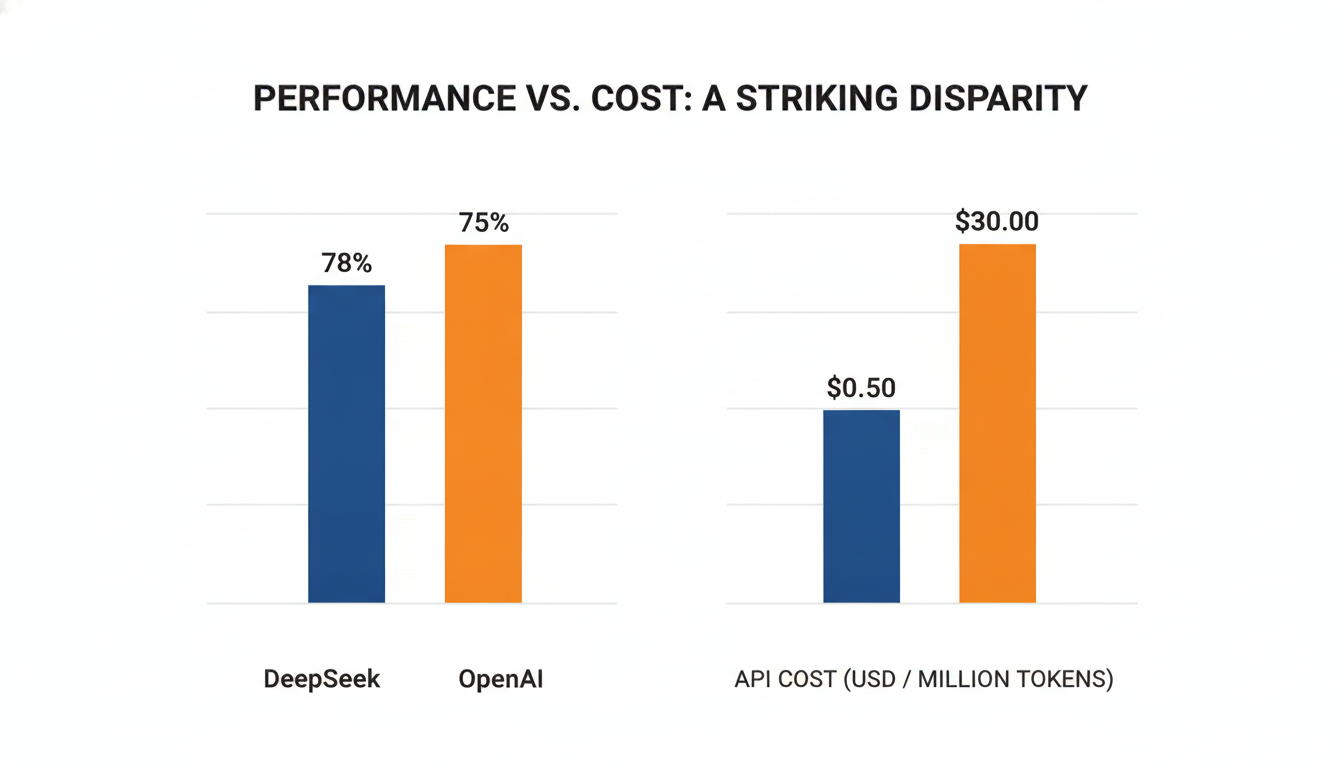
| Metric | DeepSeek-R1 | OpenAI o1 |
|---|---|---|
| Base Cost (Input per 1M) | $0.55 | $15.00 |
| Base Cost (Output per 1M) | $2.19 | $60.00 |
| MATH-500 Score | 97.3% | 96.4% |
| Portability | Open weights (Self-hostable) | Proprietary (API only) |
| Data Sovereignty | Complete control | Vendor-dependent |
This pricing difference fundamentally shifts how developers approach project planning. When inference becomes this affordable, building agentic systems that run thousands of internal loops becomes financially viable. The economic barrier to deploying autonomous software agents has effectively dissolved overnight.
Key Insight: Minor gaps in pure logic benchmarks are irrelevant to businesses that see an immediate 96% reduction in operational cloud expenses.
Is OpenAI’s Moat Actually Under Threat?
Direct answer: Yes, OpenAI’s raw technological moat is eroding quickly, though its integrated enterprise platform and consumer mindshare remain highly defensive assets.
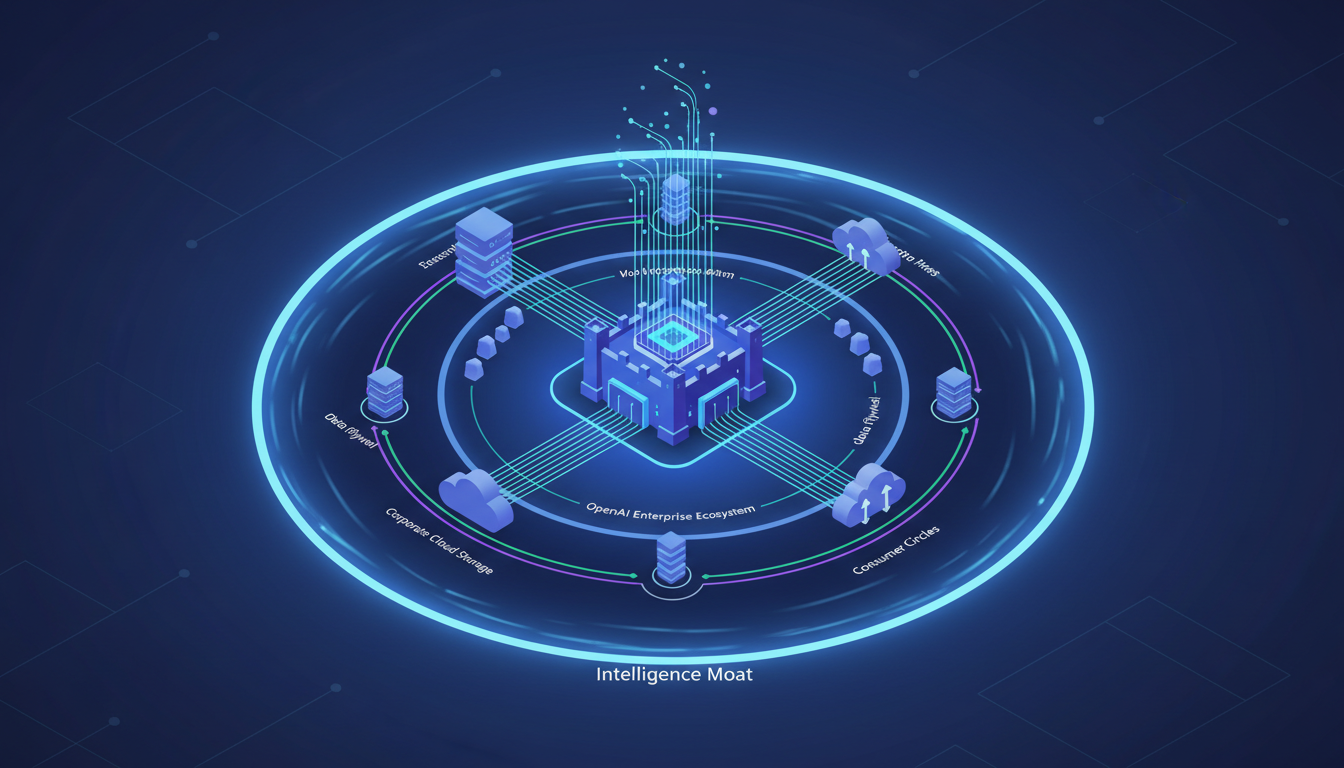
OpenAI still maintains a defensive perimeter around its product ecosystem and institutional partnerships. The deep integration with Microsoft Azure and consumer software like Office provides a direct channel to corporate buyers. Most enterprise clients value security certifications and legal indemnity over raw open-source savings.
Closed-weight models also benefit from massive, real-time feedback loops from millions of ChatGPT Plus subscribers. This active usage creates a data flywheel that helps refine system prompts and conversational nuance. Open-source models struggle to replicate this level of continuous, real-world user interaction.
| Moat Category | OpenAI Status | DeepSeek / Open-Source Status |
|---|---|---|
| Enterprise Integration | High (Direct Azure & MS Office integrations) | Low (Requires custom orchestration infrastructure) |
| Ecosystem & Tools | Mature (GPT Store, workspace tools, APIs) | Growing (Requires third-party wrappers) |
| Feedback Flywheel | Massive active consumer feedback loop | Relies on public datasets and synthetic generation |
| Fine-Tuning Flexibility | Limited to proprietary API constraints | Complete (Full weight access, local distillation) |
Even so, the overall market is witnessing rapid model commoditization. As the capability gap between open and closed models shrinks, the strategic value of the base model drops. OpenAI must transition from being an “intelligence provider” to a complete application platform to retain market share.
Key Insight: OpenAI’s real defense is not its secret model weights, but the administrative friction that prevents enterprises from rewriting their legacy cloud integrations.
The Real-World Impact on Enterprise AI Budgets
Direct answer: Enterprises are utilizing DeepSeek-R1 to slash operational bills, leading to a massive shift toward local hosting and multi-model middleware architectures.
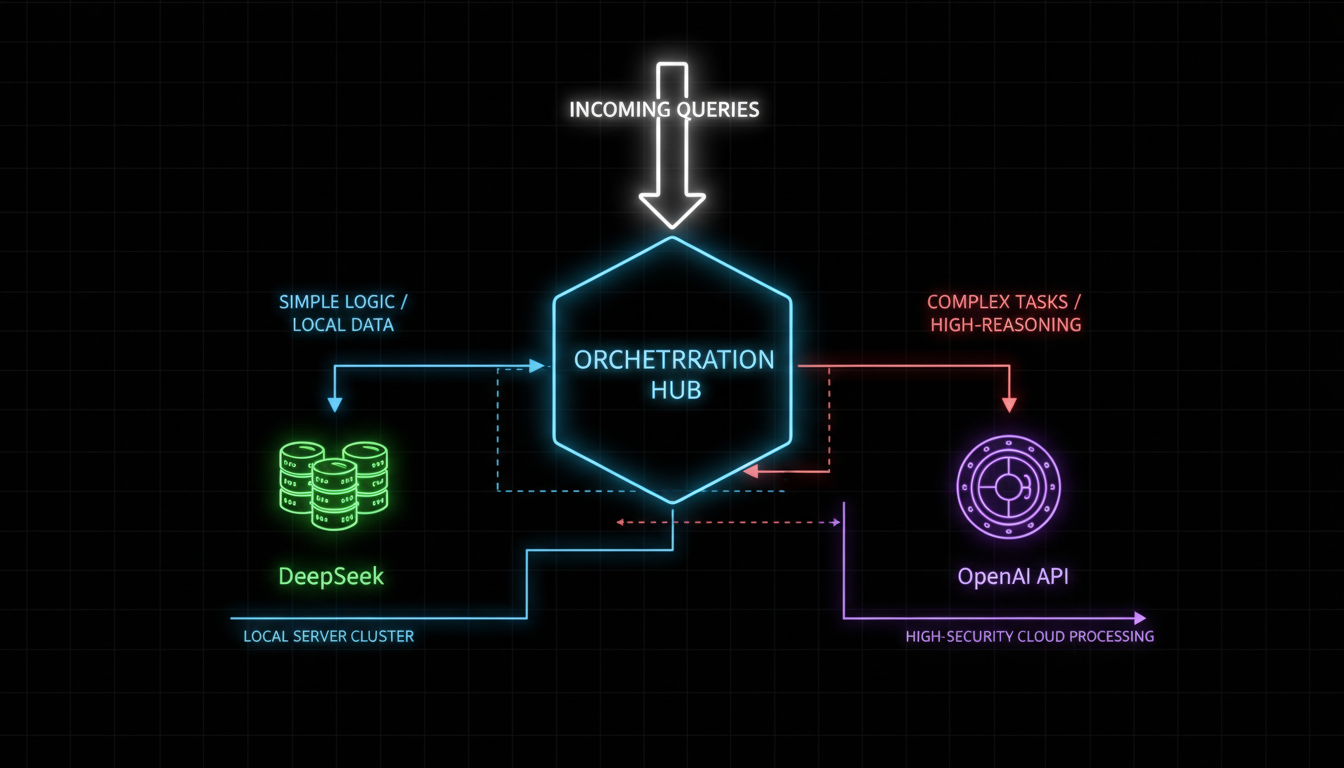
Savvy enterprise technical officers are actively shifting to a multi-model middleware approach to bypass vendor lock-in. Instead of routing all queries to a single expensive provider, they employ dynamic orchestration software. This middleware automatically sends simple tasks to DeepSeek-R1 and routes highly complex queries to OpenAI.
However, switching models is never entirely free. Teams face hidden integration costs, including re-engineering complex prompt structures and adjusting to different latency patterns. Fine-tuning an open model on custom hardware also demands highly specialized engineering talent.
Key Insight: The winner of the AI price war is not DeepSeek or OpenAI, but the middleware providers that make switching between models completely effortless.
The WIMFY Matrix (What’s In It For You)
| Target Audience | Key Benefit of DeepSeek-R1 | Actionable Next Step |
|---|---|---|
| For Developers | Zero licensing fees, complete weight access, and local testing capabilities. | Deploy the R1 model locally to debug logic paths and inspect output structures. |
| For Creators | Highly affordable reasoning power that bypasses strict subscription limits. | Seek out third-party web apps built on open-weight APIs to save on monthly platform fees. |
| For Everyday Users | Advanced logical breakdown and code help without premium price barriers. | Compare R1 side-by-side with your standard assistant on multi-step reasoning queries. |
Frequently Asked Questions
Ultimately, the industry is entering a model-agnostic era. To prepare for this reality, your immediate next step should be to audit your current cloud software architecture, locate your highest-volume API endpoints, and begin testing DeepSeek-R1 in a sandbox environment to run side-by-side latency trials.
Follow the Rabbit Hole
- Stay ahead of the changing landscape by tracking the AI landscape evolution.
- Examine the structural battles in our deep dive of open source AI models.
- Audit your architecture today and implement smart strategies for LLM API costs optimization.
